Day One of a week-long mini-webinar. You are encouraged, if you like, to add your comments after this post.
Every shopper past the stage of preferring a nickel to a dime 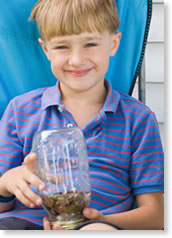 because the nickel’s bigger, understands that the value of anything offered for sale depends not only on its intrinsic worth (is it silver or silverplate? Polyester or silk?) but on the worth that specific buyer puts on it for a hundred other reasons. That’s why the same item will sell at a garage sale only if offered at a fraction of the price it would fetch in an antique shop. The location and ambiance of a market adds to the perceived value of the item.
A study says that people who were given a sip of the same wine, in two different glasses, one a basic Styrofoam cup and the other a Tiffany goblet, rated the wine in the goblet better-tasting. When asked how much they would spend on a bottle of “these two different wines”, the wine in the more luxurious glass was valued much higher. That’s perceived value. The experience of sipping the wine in an elegant glass added to the perceived value.
Why would a resale retailer care
about perceived value?
Because it affects, directly and every minute of every day, the prices the shop can “get” for their goods. In a very real way, resaling is almost completely about perceived value. So in this modest webinar, we’ll talk about how you can increase the perceived value of every last thing in your shop, every day…without spending a lot of money or effort in doing so. Selling your items more readily for more money will not only put more money in your pocket, but in the pocket of your consignor as well, which of course leads to better business.
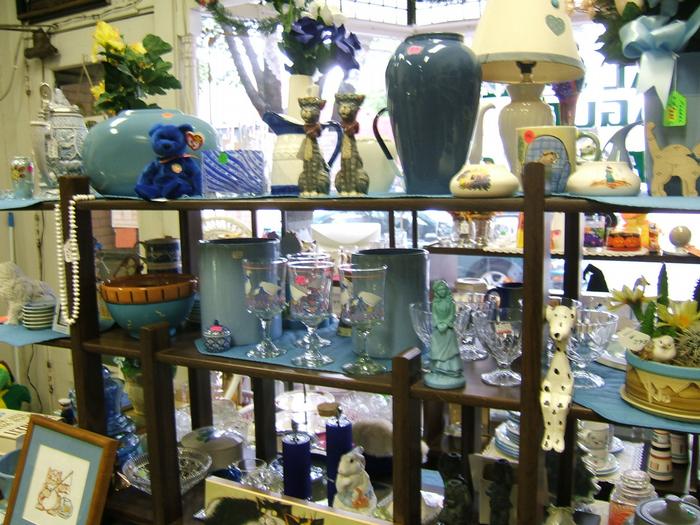
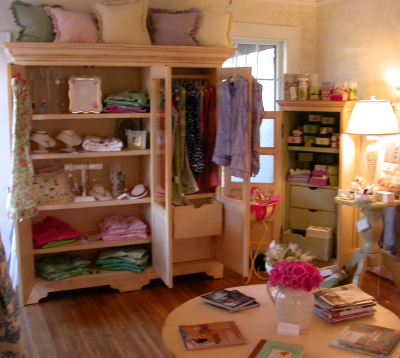 Adding perceived value is important to the buy-outright shop as well, since store-owned goods must get the highest-possible return on the shopkeeper’s investment. And for the NFP donations-only thrift store run as a fund-raiser for a charity, perceived value is vital to their best donors with the best potential items to give: I love to give my things to that shop because everything looks so nice there and they obviously raise a lot of money for their cause. Even the most selfless donor doesn’t want her precious previously-owned items to be sold for a pittance. Click on these two photos for close-ups… can the resale shopkeepr set higher prices in one versus the other?
Where can I get me some?
First, before you go charging around trying to add perceived value to your goods, you need to know just what your potential market considers a value. While I think we can all agree that any shopper looking for any item in any price range values cleanliness and politeness above dingy surliness, there are major differences in target markets. Perceived value to your clientele may be edgy hipness (the terminably cool teen/twenties marketplace), early-morning hours (if your childrenswear shop is located within eyeshot of a day-care center) or the ability to conduct business in a language other than English. On the other hand, black dressing rooms and the latest rap wonders on your sound system won’t add any perceived value to your St. John knits-loving audience. (To say the least.)
There are a few more “universal”, or nearly-so, ways to increase perceived value for all markets. The most obvious one, in this time-pressed Zeitgeist, is convenience. Who among us hasn’t spent more for milk at 7-11 at midnight because the grocery was further away and unlikely to be open then? A less obvious one, but one that many resalers overlook, is the likelihood of success. A large and ever-changing array of goods will, in the perception of the shopper, increase the chances that she will, indeed, find something on her trip in, and thus the time and energy invested in coming to your shop will be value well-spent.
Tomorrow, we’ll explore how you can make your “wine glass” be the more luxurious one, which is Step One to making perceived value in your shop higher. In the meanwhile, you might be interested in how we added perceived value to a very small shop’s limited holiday stock in one hour, with zero cost. Try it in a corner or two of your shop before we meet again…
Day 2 of this mini-seminar, Day 3 , Day 4 and Day 5.
(Photo of child courtesy coinnews.net)



[…] a mini-vignette with similar styles, colors or materials makes each piece have more perceived value… and makes a multi-item purchase much more […]
[…] Making a Weird & Wonderful corner, vignette, department in your shop can take the image of your business from boring to bodacious! (Not to mention, having this area makes all that weird stuff look great, and increases its perceived value!) […]
[…] And finally, here’s so “cheap”…i.e. free…ways to increase what YOUR resale customer is willing, no, more than that, THRILLED to pay. […]
[…] How can I get me some of that Perceived Value (a mini-seminar, grab your cocoa before you settle in to read) Possibly related posts: (automatically generated)A Treat for Resale and Consignment ShopkeepersGoodie Bags, goodie bags….Do we have stories to tell… […]
PS I am going to post my partial list of plus size brands etc today on tgtbt. It is a work in progress. I currently have 29 pages set to go into a binder. Way to many to post, but here is a start. I hope it is of hel to some.
Now this is what I’m talking about. I knew this was gonna be a HOT HOT topic. Thanks for compling it and I look forward to reading more. IMHO, there is simply no more important topic than “why shop resale/consignment today? What are the values?” It is current and so needed by shopowners everywhere. I wanted it and walah you made it available. You rock. Thanks Kate.
[…] other words: does this web site add to the perceived value of the shop’s offerings? Is it pre-educating customers well and elevating the status of […]
[…] you using your floor space to its potential? Or are you dragging DOWN the perceived value of your new arrivals by trying to wring the last pennies out of stuff you made a mistake accepting? […]
Hi Colleen,
Perceived value = “boutique-looking” is not necessarily true. We’ve discussed a bit of “decor” in this first day, but that’s not all, and sometimes not at ALL, what upping the perceived value of your merchandise entails. In fact, it can be a big hindrance to value shoppers.
As I say above: “you need to know just what your potential market considers a value.” Out-“classing”, making your shop too “fancy”, can be as big a mistake as the rap music/ St. John’s dichotomy.
and Hi Tanya,
The shop in our Extreme Makeover page didn’t have a problem with selling knick-knacks (and furniture and womenswear and menswear)…they had a problem with the presentation making the odds and ends look good. Yes, they still sell home decor.
Thanks for reading!
Great Topic… looking forward to reading more.
Did the store (mentioned when you click into “how we added perceived value”) end up keeping the knick knack area???
Have a great day!
I totally agree 100% with what you’ve said here Kate. This is the reason why I have put so much into the look of my store. Unfortuneatly, I’m thinking my market is value to strickly price…they don’t care about the package anymore, just give ’em a great price. I just found out a NFP a few blocks away from me, had increased their April and May by 3 x’s from last year…while my preceived value boutique looking store has dropped 15%. hmmm?
Colleen