Feeds:
Posts
Comments

Posts Tagged ‘perceived value’

Day 3 of a week-long mini-webinar. You are encouraged to add your comments. If you’ve stumbled upon us resalers and consignment shop owners and thrift-store managers, here’s Day 1 and Day 2, to catch you up.
Now of course we’re not talking just old clothes here. We’re also talking used playpens, secondhand mirrors, previously-owned couches and handbags and vases and books and lawn mowers. You know what I mean.

Some misguided souls might believe that “used” and “value” are a contradiction in term, an oxymoron, like “jumbo shrimp” and “California expressway.” Is there any way to alter their mind set?

So today we will examine the Feasibility of Changing Perceptions

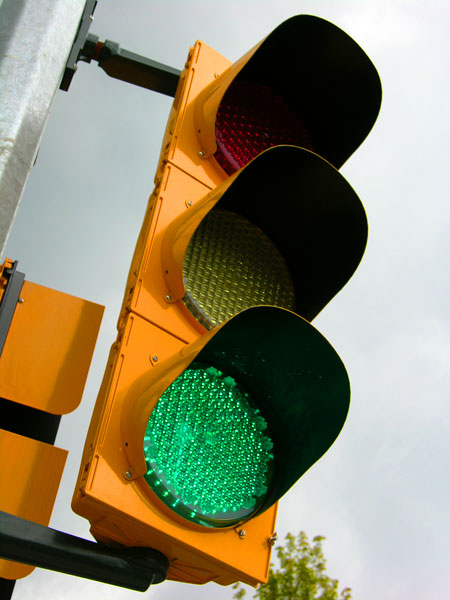
Why bother? Because there’s a whole giant world of shoppers out there who have never ever shopped for anything secondhand. (They do have a tendency to “forget” that their home was lived in by another family, that Aunt Milly’s Rosenthal china was “used” before they inherited it, and that their teenage daughters are swapping clothes like no one’s business, pun intended.) Can we, with the use of perceived value, make shopping secondhand a GREEN LIGHT?

Here’s an exercise on changing perception from another blog:

Wine makers know that screw cap bottles are better and cheaper than the traditional cork. Yet it is impossible [for the wine makers] to change to such caps. It may be because buyers would equate screw caps with inferior wine. It may be because the whole event of wine drinking requires the cork.

How can this be changed?

1. It is possible that the transition could be made if the screw caps were very expensive in the first place – for example, enameled. If such caps became collectors’ items, than the transition might be accomplished. Here the changed perception, from seeing screws as less desirable to more desirable [italics mine–Kate], is an example of the direct blocking of the ‘cheap’ image.

2. We might go in exactly the opposite direction. We could sell exactly the same wine at two prices: £12 with the usual cork and £10 with a screw cap. People would now set out to convince themselves that the cork was not that important a part of the event of wine drinking.

3. Another approach would be an education campaign to show that corks could go bad and could leak, whereas screw caps could not. This would be less effective than either of the other two approaches – making screw caps either dearer or cheaper – but could be combined with either.

Now, translating this example into marketing resale goods is simple. 1. We could make our product more desirable. 2. We could offer similar goods side-by-side: new/ relatively expensive and previously-loved/more budget-friendly. 3. We could show and continually promote why used is better.

Some thoughts to get you started on how this applies to your shop.

Point 1: Making your products more desirable than new. They’re more convenient. It’s more pleasant to shop with you. Price, of course, but also selection, style, and usability. Changing “used” into the advantageous, wise way to shop (at least, for the merchandise YOU carry!) Perceived value: is it more pleasant to shop for budget-friendly goods in your store than anywhere else they are likely to shop?

Point 2: Offer new and used side by side: Create “new” sections in your store, being sure to label each item so in an obvious manner (since we know it’s often impossible to tell!) Signage such as New Whatitz from $15 and Experienced Whatits from $6 will allow shoppers to make their own choices. Promoting a “new” section in your shop and in your advertising also gives the I wouldn’t DREAM of buying used consumer a reason to come in. (Or an excuse, if her snooty neighbor sees her shopping in your place!) Alternative: SHOW what new costs vis magazine illustrations and ads versus what something very similar costs at your shop.

Point 3: Show and promote that used is better. You know all the reasons. (If you don’t, check out The Best of Too Good to be Threw.) Find the specific reason that speaks to your target market and promote it constantly. In every way. Lead people into perceiving that the value is in your shop…whatever value THEY, umm, value.

Any more ideas? Let us know! Click the little comments box below to add to our suggestions!

BTW, that $5 word, oxymoron? Oxymoron is from the Greek oxy (“sharp” or “pointed”) and moros (“dull”). Thus the word oxymoron is itself an oxymoron, says Wikipedia.

Tomorrow: Perceived Values includes Positive Outcomes (and a free gift for you from me)

Read Full Post »

Day 2 of a week-long mini-webinar. You are encouraged, if you like, to add your comments after this post. (Here’s Day 1, if you’re just joining us.

Value-added goods sell for more, and faster, and your clientele is happier.

And of course that’s what we what: good profits for us and our suppliers, more turnover, and thrilled customers spreading the word far and wide. Perceived value is in the eye of the beholder, as they say beauty is, so there’s no one answer that will work for every shop, every market, and every shopkeeper. Let’s take a look at the biggies today.

The wine glass: A shop which adds value to your goods

Yesterday, we showed and talked a little about your shop’s appearance, and I suggested you look around your shop with fresh eyes. There’s a little trick, two actually, I’d like to share with you.

  • Whip out your camera (you do, of course, keep one at the store for all sorts of reasons we can talk about next week) and TAKE PICTURES. It is absolutely flabbergasting how the camera “sees” things your proprietor’s eyes skim right past. For example the situation to the right: you as shopkeeper see the sterling jewelry. The customer sees those big clunky price tags reminding them that this stuff is, umm, (hush!) USED. They can barely see, yet alone value, the wonderful assortment of interesting jewelry here.
  • Second trick, used by painters: Turn your back to whatever you’re looking at, and look in a hand mirror. Gives a different perspective, shakes up preconceptions.

Okay, that’s it for now on the look of your shop. If you aren’t tickled to death with how you, so far, have solved the problems of limited space/ variable and varied merchandise in your shop, take a look at Shop Sizzle, which has literally HUNDREDS of ways to make your shop look like steak instead of pot roast.

But as “nice” as your shop looks, that’s not all that might count.

Yes, you can indeed make your shop look “too” good. If the look, furnishings, decor and displays of your shop are elegantly perfect, and your target market is more down-to-earth, you could be intimidating the very folks you want to be comfortable shopping with you. Many’s the novice shopkeeper who wants to sell “designer” in a blue-jeans town before she really buckles down and learns that the Mart brands are just fine, thank you, to her marketplace. There’s a lot more folks who love Walmart and wouldn’t step foot in Saks. (And as an aside, guess which corporation makes more money?)

There are “experience” shoppers (those who love love love Pottery Barn and Anthropologie for the ambiance: they want their lives to be like that) and whose perceived value of the goods offered in those stores is high. Then there are “value” shoppers, who are relatively immune to ambiance, who simply want something at a good price. (Ever try shopping in Restoration Hardware with a man? You’re oohing and ahhing over the cunning hand-held shower for $400, he’s saying “%^$# you can get the same thing at Ace Hardware for less than $20.” Lesson: if you’re in an Ace-type market, better BE Ace. And keep the men at home.

So if your target market is more price-conscious, what will add value, in those customers’ eyes, to your merchandise?

  • “Compare to” pricing. In our resale market, that’s usually “Originally” pricing. If you know that item was $129 new, include that info in your tag description: “Originally $129/ Our price $34”
  • .99 endings on your prices. Or .87 or .69, whatever. It’s silly, it’s true, it works: $6.99 is a steal, $7 is not so much a steal. (Related: “Today Only! $1.29! Limit 3 to a customer.”)
  • Any and all markdowns. Even if they aren’t “true” markdowns. How many businesses put a $95 price tag on something, and 3 days later, “mark it down” to $69?
  • Yellow and red. Yup, those clown-color sale tags and signage are effective. Add slip-on markdown tags to mark downs and watch them fly out the door. Similarly: the BIG TAG idea that was brought to our attention by two resale peers.
  • Layaway plans. Especially at the beginning of a season. She doesn’t need a winter coat yet, so it’s hard to justify putting out the money for it now. But she knows winter always comes, so layaway suits her lifestyle and wallet better.
  • Beat garage sales at their own game, plan for bag sales and dollar racks and BOGO events. Especially BOGOs!

So you see, “perceived value” is not only, and sometimes not even, about looks. It can also be about price.

What about that time-pressed shopper?

Now I am going to have to get over a teensy-weensy little bit of prejudice here about the “I am SO busy, because I am SO important” mind set. If I’m honest, I hate that attitude so much because, well, you see, My name is Kate and I’m a timeaholic. (Or I flatter myself that I used to be.)

Time-pressed shoppers value, above everything else, time. They will pay more and gladly if it saves them time. And if you want them to shop in your place, you will do best to keep that firmly in mind. How to appeal to this type of resale shopper?

  • Maintain, and use religiously, your want list and customer book.
  • If she’s coming in to see something you put aside for her, have related merchandise ready to present. She asked you to look out for a matte celadon vase, at least 14″ tall? After you show it to her, have at your elbow the marvelous silk peonies that would look so great with it, the celadon dressing gown, and the Feng Shui decorating book. And have the bubble wrap and shopping bag right there too.
  • Pamper her.

Tomorrow: Perceived value and old clothes. Oxymoron?

Read Full Post »

Day One of a week-long mini-webinar. You are encouraged, if you like, to add your comments after this post.

Every shopper past the stage of preferring a nickel to a dime because the nickel’s bigger, understands that the value of anything offered for sale depends not only on its intrinsic worth (is it silver or silverplate? Polyester or silk?) but on the worth that specific buyer puts on it for a hundred other reasons. That’s why the same item will sell at a garage sale only if offered at a fraction of the price it would fetch in an antique shop. The location and ambiance of a market adds to the perceived value of the item.

A study says that people who were given a sip of the same wine, in two different glasses, one a basic Styrofoam cup and the other a Tiffany goblet, rated the wine in the goblet better-tasting. When asked how much they would spend on a bottle of “these two different wines”, the wine in the more luxurious glass was valued much higher. That’s perceived value. The experience of sipping the wine in an elegant glass added to the perceived value.

Why would a resale retailer care keep reading>

Read Full Post »

One of the worst parts of being retired from the consignment business (besides not getting first dibs any more!) is that you see something PERFECT for a shop…and then remember that you don’t have a shop anymore.

So, I decided I’d start a new category here on the TGtbT blog: “My Favorite Things”. They’ll be stuff that, if I did still have a shop, I’d buy, get, copy, make in a heartbeat. (more…)

Read Full Post »

« Newer Posts